

Picts and the Wemyss Caves
The nation of the Picts, the Roman-named ‘painted ones’, or possibly the Latin form of a forgotten native name, emerged from the tribal societies of late Iron Age Scotland through resistance to Roman control. Between the 6th and 9th centuries AD, their territories...
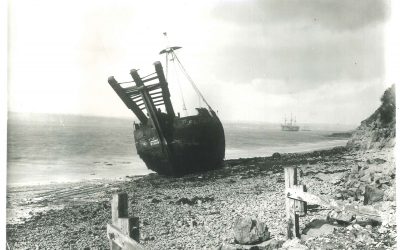
“Beautiful Railway Bridge of the Silv’ry Tay…”
“Beautiful Railway Bridge of the Silv’ry Tay! Alas! I am very sorry to say That ninety lives have been taken away On the last Sabbath day of 1879, Which will be remember’d for a very long time…” The appalling verse of William Topaz McGonagall might wreak havoc on...

Exploring the Clyde with Britain at Low Tide
This week, Channel 4’s Britain at Low Tide comes to Scotland to explore the archaeology of the Clyde…here we give you a bit more about one of the stories that will feature. Glaswegians in the 18th century had a problem - its trading ships landed at Port Glasgow, 18...

Britain at Low Tide – Behind the Scenes
The second series of Britain at Low Tide (Channel 4) features two episodes filmed in Scotland, and the programme is a great opportunity to show off some of our stunning Scottish coastal archaeology. But how do programmes like this get made? The first episode features...

Scotland’s Coastal Heritage at Risk: A Model of Volunteer Involvement in the Research and Management of a Threatened National Resource
This article was originally written for the January 2018 edition of the Society of American Archaeology's magazine the Archaeological Record, and is reproduced here so that non-members can read it. Joanna Hambly, University of St Andrews Introduction Climate change...

Uncovering the hidden heritage of Higgins Neuk
Last month saw us return to Higgins Neuk for our third season of investigation. Building on 30 years of historical research by John Reid, we were on the hunt for Scotland’s 16th century royal dockyards. John has made a convincing case that the second of the two...

A medieval Royal dockyard at the Clackmannanshire Bridge?
If you crossed the Clackmannanshire Bridge one weekend in early October, you might have seen clusters of people, conspicuous against the green and brown of the salt marsh in yellow, hi-visibility vests. Guided by experts from the Universities of Stirling, Oxford and...

Submerged forests and fishing heritage in the Western Isles
In May, we were happily again in the Western Isles discovering new places with new friends and revisiting familiar sites with old ones. We were lucky to spend time on Barra with Calum McNeil, local genealogist, retired fisherman, boat builder and font of knowledge...

Pettycur’s 17th century storm-wrecked harbour revealed
In October 2015, shifting sand at Pettycur beach near Kinghorn in Fife revealed the outlines of a stone structure on the beach. The site is well-known locally. A cannon was discovered here in the 1990s, and small parts of the structure periodically emerge from the...
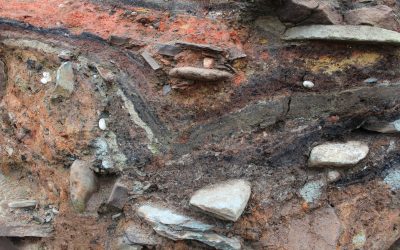
Storms reveal a shipwreck burial and a new broch in Channerwick, Shetland
We start our story in December 2012, when winter storms exposed a male human skeleton awkwardly squashed into a too small grave at the foot of the coast edge in Channerwick, Shetland. Investigation of the remains was commissioned by Historic Scotland, and radiocarbon...
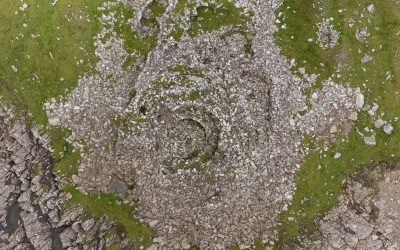
A broch blog
Brochs are amongst the most spectacular of eroding coastal archaeology, and in the course of the Scotland's Coastal Heritage at Risk Project, we have seen and recorded a few of them. Hundreds of these towers of the Iron Age would once have been an impressive sight...
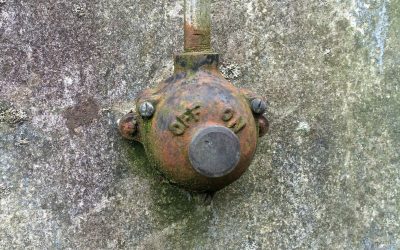
Recording Loch Ryan’s flying boat base, RAF Wig Bay
The RAF Wig Bay ShoreDIG got underway in March with the survey of the remains of the flying boat base. Set up in 1942, this was Britain's main wartime base for the maintenance of flying boats. It specialised in converting American-built Catalinas to RAF standards and...

Wemyss Caves 4D continues…
The Wemyss Caves are once again at the centre of a digital whirlwind. Thanks to funding from Fife Council, Historic Scotland and the Heritage Lottery Fund, teams from the York Archaeological Trust, (YAT), SCAPE, and the Save the Wemyss Ancient Caves Society (SWACS)...
Findhorn Bay Zulus
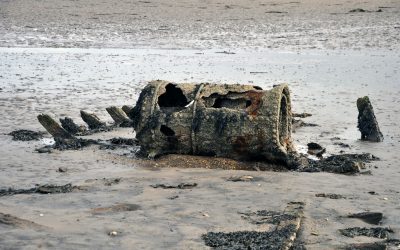
Scattered along the Culbin edge of Findhorn Bay lie the remains of at least 35 large wooden fishing boats. These are extremely rare survivals of the once common mighty Zulu herring drifter. Today only a single Class 1 Zulu survives in the Scottish Fisheries Museum in...
A blog post from Uist – the view from SCHARP volunteers.
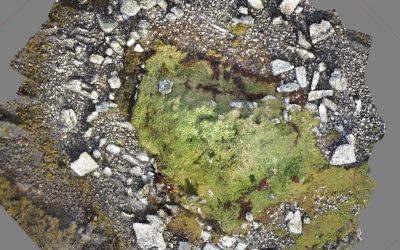
The visits to Uist by team members from the SCHARP and ACCORD project to carry out training in their respective surveying techniques a few weeks apart in the early autumn of 2014 proved a useful juxtaposition of events for Access Archaeology members Simon Davies,...