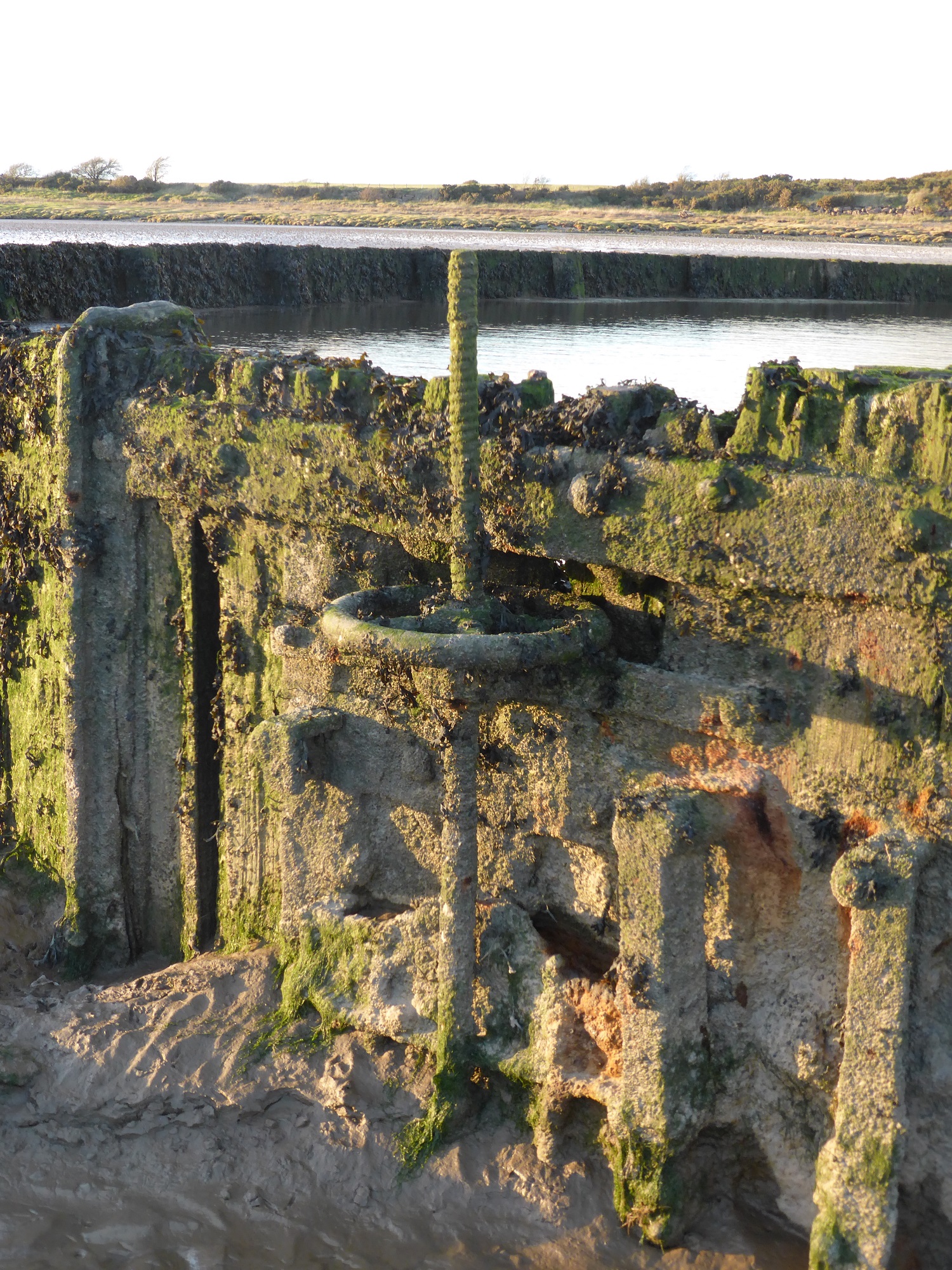
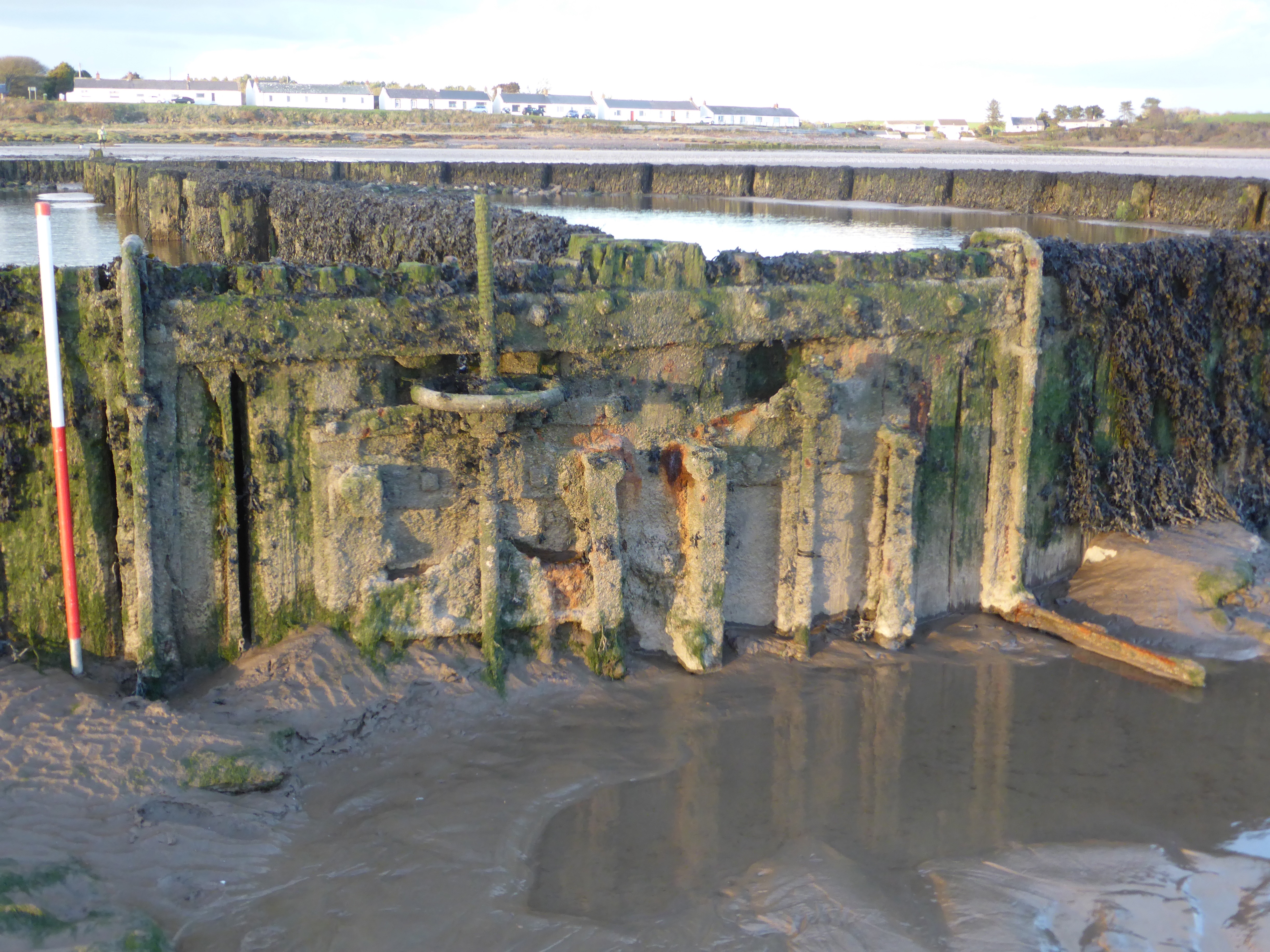
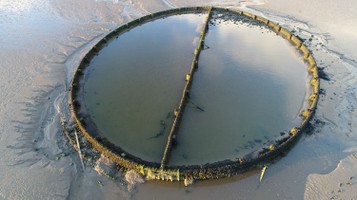
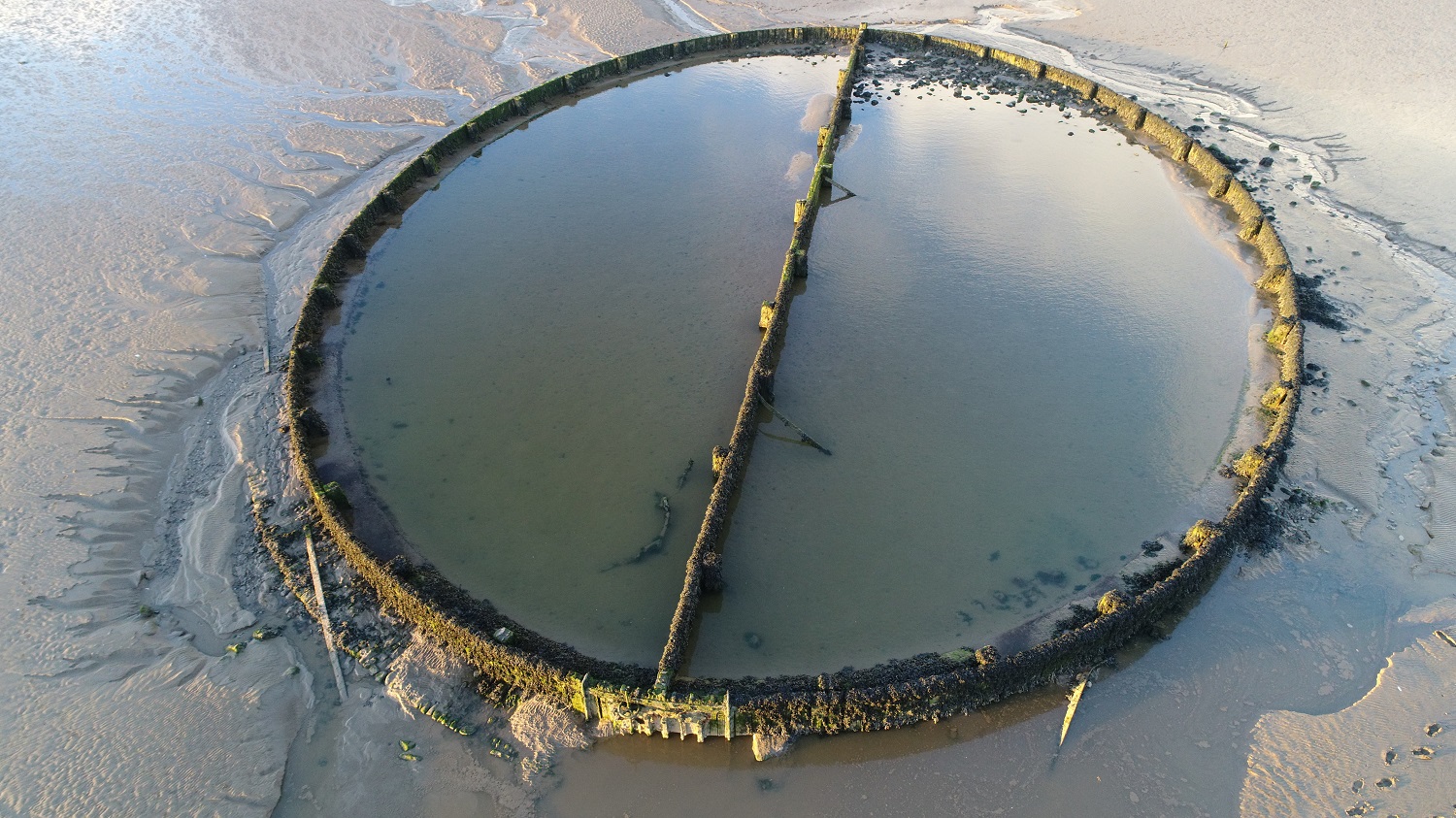
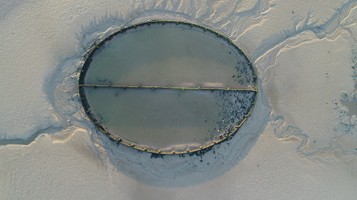
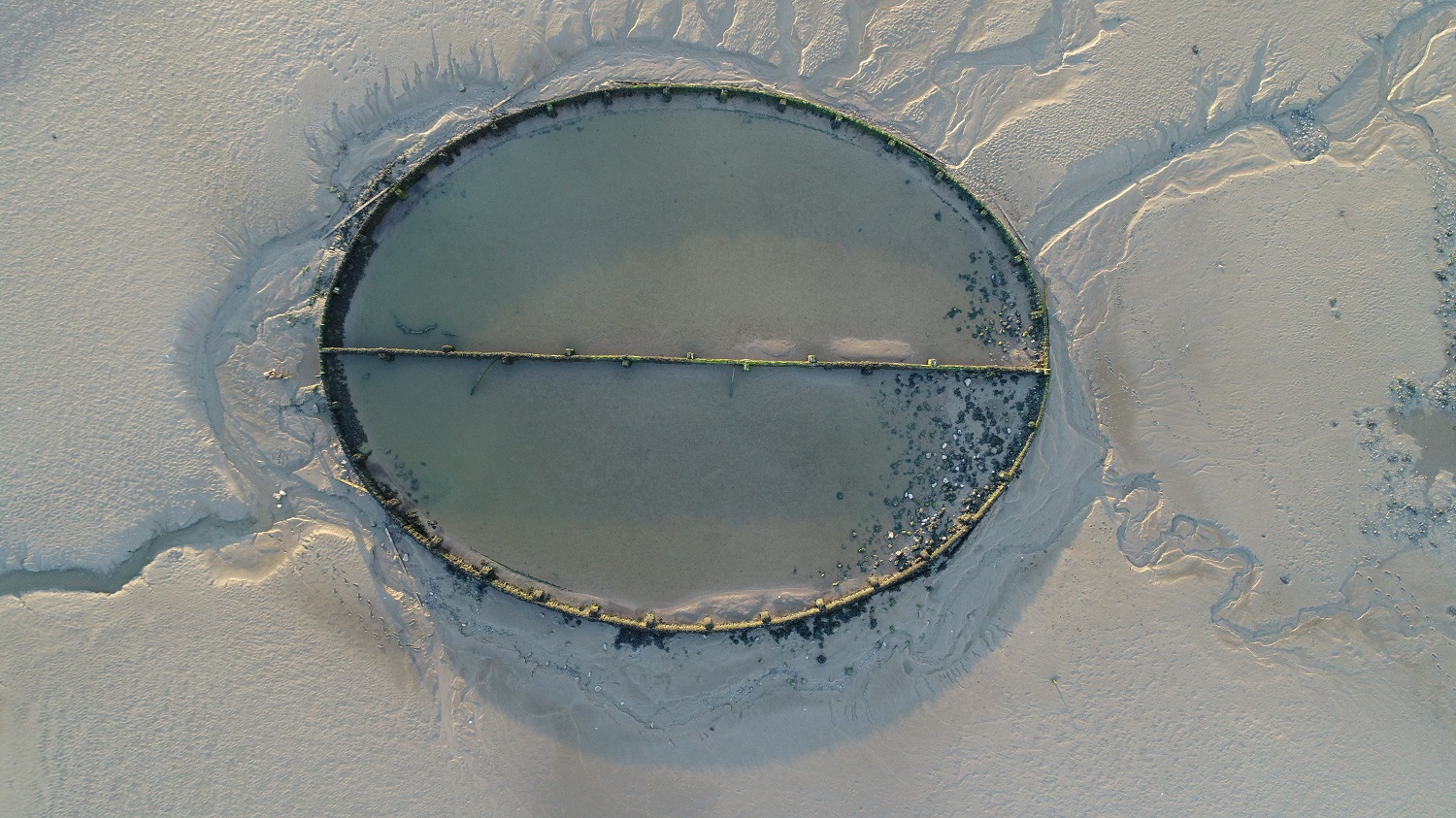
An unusual intertidal swimming pool constructed c.200m into the intertidal zone at Powfoot. Oval in plan c.34m by 28m, with the long axis running roughly N-S with a central division bisecting the structure on this line. Built of large squared timbers driven vertically into the foreshore sediment with large uprights at regular intervals around the inside and on alternating sides of the central division. Appears to have originally been reinforced with metal straps (many now partially or completely detached). A ledge c.1m wide runs around the inside edge. A cobbled stone walkway runs around the exterior, now largely covered in intertidal silt and visible only for a short length at the SW side. The interior is now largely filled with silt to a depth of c0.6m but the original water depth would have been c.1.25m. Two sluice gates in the wall at the south end of the bisecting central division appear to have operated with a 12" valve at the north end of the division to allow the interior to be kept clear of silt by using water from one side to sluice out the other side.
Documentary sources suggest that it was constructed as a 'swimming pond' in 1899 by William Tilburn of Dumfries for £516: 2/ and that following the excavation of the centre a floor was laid of 3" rough gravel topped with 3" concrete. Probably constructed as part of the late 19th/early 20th century attempt to develop Powfoot as a health and leisure resort with the attraction of open air saltwater bathing. Other local sources suggest other reasons and dates; including a near-fatal accident in 1903 when seven young girls swimming were cut off by the tide, or that it was constructed by soldiers billeted locally during WW2. Local sources also suggested that the central division was to discourage mixed bathing, or to divide shallow and deep sides. However, the consistent depth of the floor encountered by augering the silt has disproved that theory.
Location
314733.00
565191.00
27700
54.9740067
-3.3336246
Submitted photographs
Image
Date
Caption
User
08/11/2018
Powfoot swimming pool open sluice mechanism
EllieSCHARP
08/11/2018
Powfoot swimming pool sluice gate
EllieSCHARP
08/11/2018
Oblique aerial view of pool showing sluice gates on south side
EllieSCHARP
08/11/2018
Vertical aerial view of swimming pool
EllieSCHARP
Submitted updates
Update id
Date
User
3188
08/11/2018
EllieSCHARP
Tidal state
Low
Site located?
Yes
Proximity to coast edge
Intertidal
Coastally eroding?
active sea erosion; has eroded in the past
Threats
structural damage/decay
Visibility above ground
Highly visible (substantial remains)
Access
easily accessible - no restrictions
Local knowledge
is well known; has local associations/history
Description
An unusual intertidal swimming pool constructed c.200m into the intertidal zone at Powfoot. Oval in plan c.34m by 28m, with the long axis running roughly N-S with a central division bisecting the structure on this line. Built of large squared timbers driven vertically into the foreshore sediment with large uprights at regular intervals around the inside and on alternating sides of the central division. Appears to have originally been reinforced with metal straps (many now partially or completely detached). A ledge c.1m wide runs around the inside edge. A cobbled stone walkway runs around the exterior, now largely covered in intertidal silt and visible only for a short length at the SW side. The interior is now largely filled with silt to a depth of c0.6m but the original water depth would have been c.1.25m. Two sluice gates in the wall at the south end of the bisecting central division appear to have operated with a 12" valve at the north end of the division to allow the interior to be kept clear of silt by using water from one side to sluice out the other side.
Documentary sources suggest that it was constructed as a 'swimming pond' in 1899 by William Tilburn of Dumfries for £516: 2/ and that following the excavation of the centre a floor was laid of 3" rough gravel topped with 3" concrete. Probably constructed as part of the late 19th/early 20th century attempt to develop Powfoot as a health and leisure resort with the attraction of open air saltwater bathing. Other local sources suggest other reasons and dates; including a near-fatal accident in 1903 when seven young girls swimming were cut off by the tide, or that it was constructed by soldiers billeted locally during WW2. Local sources also suggested that the central division was to discourage mixed bathing, or to divide shallow and deep sides. However, the consistent depth of the floor encountered by augering the silt has disproved that theory.
Further detailed survey and recording as part of a project on intertidal swimming pools