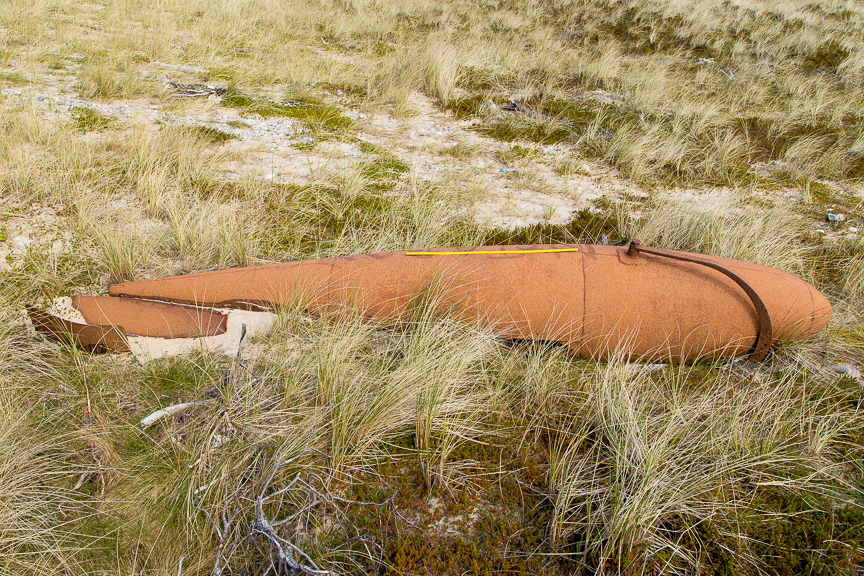
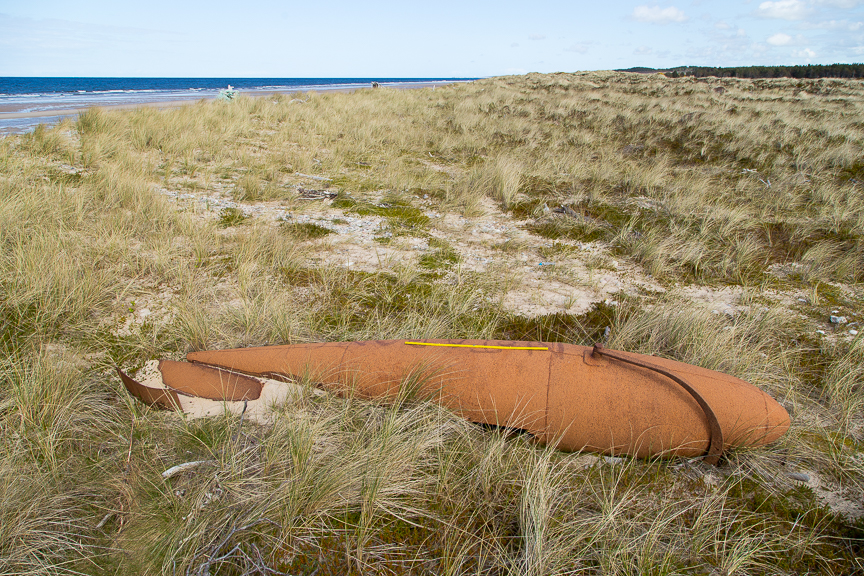
The Oropesa float—a type of paravane— was a key piece of equipment used by mine sweepers in both World Wars. All documentary evidence and photographs seen so far suggest that this design of float dates from the Second World War, and in one case, was still to be seen mounted on the deck of USS Engage in 1983.
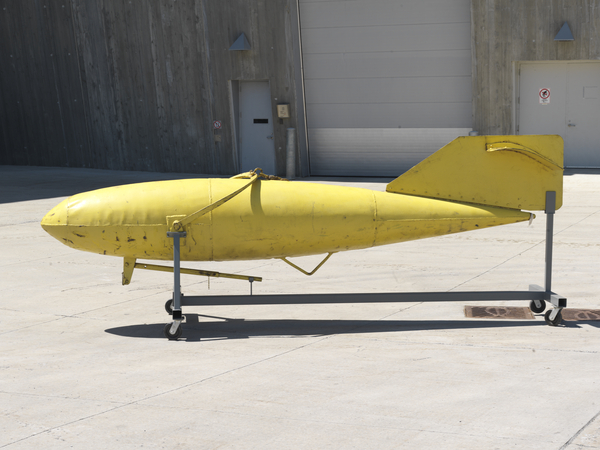
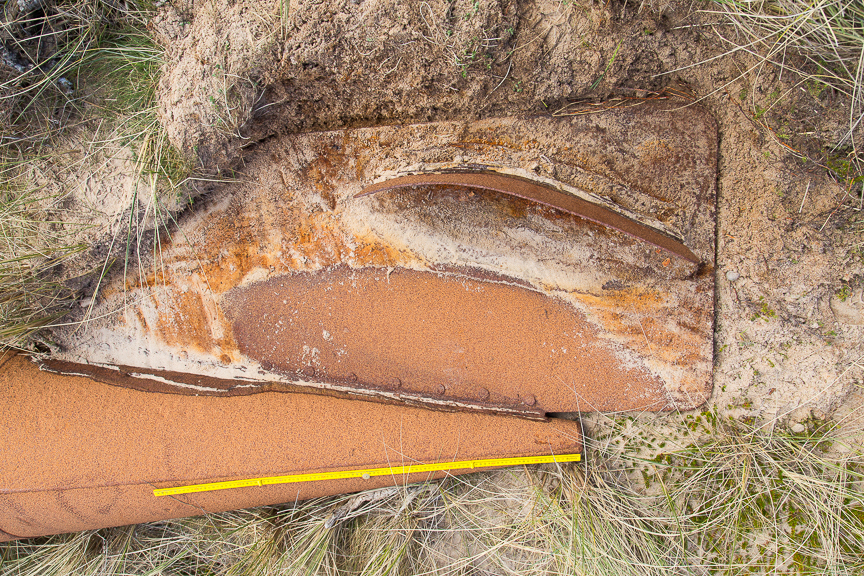
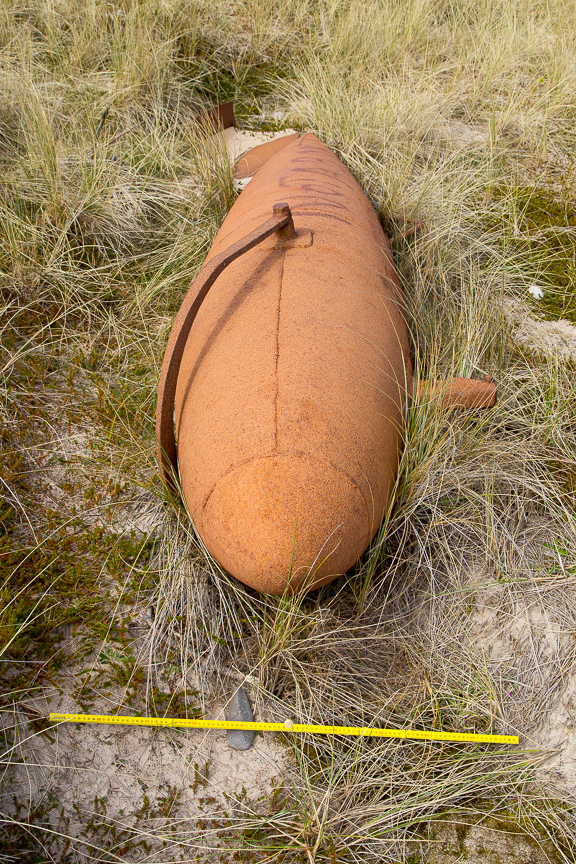
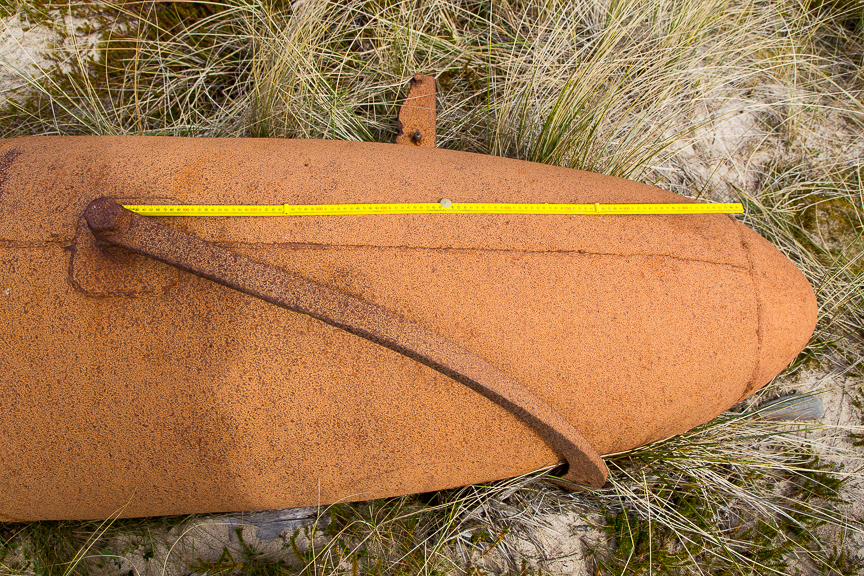
The float helps to keep the sweep wire at the correct depth as an area of sea is swept for moored mines. This one is made of welded mild-steel plate and is 4.4 m long, 0.64 m at its widest point. The side of the float in contact with the ground is corroded right through, while the uppermost side is intact. Part of the flag-support arm is corroded away, but otherwise the float is intact (tail fin and hydrofoil, lifting loop, towing arm).
Visited by Scotland's Coastal Heritage at Risk (SCHARP) 1 May 2015
Location
298442.00
864282.00
27700
57.6569443
-3.7036147
Submitted photographs
Image
Date
Caption
User
01/05/2015
Museum specimen of an Oropesa Float (Canadian Museum of History)
mgts24
01/05/2015
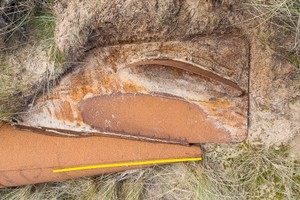
Oropesa Float, tail fin with hydroplane.
mgts24
01/05/2015
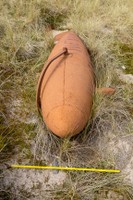
Oropesa Float, looking head on at the float.
mgts24
01/05/2015
Oropesa float, mineweeper, front of float showing towing bar and flag-mounting bracket (top).
mgts24
01/05/2015
Oropesa float, mineweeper, looking towards underside of float
mgts24
01/05/2015
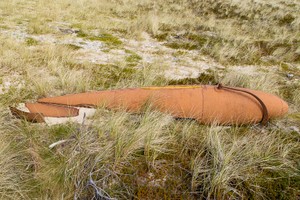
Oropesa float, mineweeper
mgts24
Submitted updates
Update id
Date
User
1992
01/05/2015
mgts24
Tidal state
Low
Site located?
Yes
Proximity to coast edge
< 10m
Coastally eroding?
active wind erosion (in dunes only); accreting
Threats
visitor erosion
Visibility above ground
Highly visible (substantial remains)
Visibility in section
Not visible
Access
easily accessible - no restrictions
Local knowledge
don't know
Description
The Oropesa float—a type of paravane— was a key piece of equipment used by mine sweepers in both World Wars. All documentary evidence and photographs seen so far suggest that this design of float dates from the Second World War, and in one case, was still to be seen mounted on the deck of USS Engage in 1983.
The float helps to keep the sweep wire at the correct depth as an area of sea is swept for moored mines. This one is made of welded mild-steel plate and is 4.4 m long, 0.64 m at its widest point. The side of the float in contact with the ground is corroded right through, while the uppermost side is intact. Part of the flag-support arm is corroded away, but otherwise the float is intact (tail fin and hydrofoil, lifting loop, towing arm).
A coat of paint would slow the corrosion and preserve what may be a rare survivor of mine sweeping of the Second World War.
Comments
This is a link for a page with a good illustration of how Oropesa floats were used:
http://www.minesweepers.org.uk/sweeping.htm
This link has photos of Oropesa floats, exactly like this one, being deployed in the Second World War
http://www.halcyon-class.co.uk/minesweeping.htm