NO51NW 42 5320 1574.
(NO 5306 1576) Kinkell Cave (NAT)
OS 6" map (1921)
Kinkell Cave. Excavated May and June 1913 by Prof Jehu and A G B Wace. The cave is about 15 feet wide and 80 feet long. The floor has a double slope, one from north to south due to the pile of fallen rubbish at the entrance, the other from west to east due to the angle of dip of the sandstone beds.
A trench was dug to a depth of 6 feet from the mouth, cutting into the cave from N-S. "At a distance of about 12 feet from the entrance traces of human habitation were detected by the presence of a thin black
layer, 1 1/2 to 3 feet below the present floor. From this point inward a pit was sunk covering approximately the hatched area shown on the plan." The stratification in the pit proves that the cave had been inhabited at several periods, and a rich find of bones was obtained. The thin black layer covered only a small area and contained a few bones and shells.
1 1/2 feet below this another black layer was seen, nearly 3 feet thick and extending over the whole of the hatched area (see plan). This deposit was full of decomposed organic matter indicating human occupation and it rested on a roughly made floor of Sandstone slabs covering the space shown on the plan by cross-hatching. This layer yielded bones, fragments of boars tusks, and shells of winkles, whelks and limpets. Two fragments of ordinary reddish and rather thin Romano-British ware and a piece of Samian ware, evidently the centre of the bottom of a bowl, were the only fragments of pottery found. These sherds however, date the occupation of the cave to the second century AD, but since the sherd was found in the middle of the deposit the floor may be of earlier date. The handle of a bronze jug and some iron nails were also found in this stratum. A slab of sandstone with curious incisions was found on top of this stratum. The type of stone is not obtainable in situ anywhere near the cave; it bears a human figure, possibly a monk and some crosses. The crosses mentioned by Stuart (1867) as visible on the wall of the cave are probably of the same period. (Stuart dates the small inscribed crosses in the majority of Fifeshire caves to 5th-9th century).
Below the paved floor was another layer of sandstone rubble, and in this at two levels (E-F) were thin black streaks indicating two short periods of human occupation. These yielded only a few bones and shells and are so close below the paved floor that they cannot be much anterior in date.
"The data lead us to the conclusion that the cave was inhabited in the Roman period and again during the Celtic Early Christian period. Later, according to local tradition, it served as a place of refuge for Covenanters."
A J B Wace and Jehu 1915
Similar information. The cave now bears no trace of the sculptured animal and crosses, probably due to the fact that the sandstone roof is gradually flaking off.
Information from D C Baird, 29 June 1956 (visited February 1952).
NO 5314 1574. The frontage of the cave has silted up, and entry was not possible. The opening is 4m wide and 1m high.
Visited by OS (JLD) 23 October 1956
The actual cave referred to in OS 6" map (1921) is situated at NO 5320 1573 and is still accessible.
Visited by OS (ES) 19 November 1962
NO 5320 1574. This cave is as planned by Wace and Jehu and its present condition generally as given by Baird.
Surveyed at 1/2500.
Visited by OS (WDJ) 3 September 1968
Roman finds from the cave consist of a possibly 2nd century handle of a bronze jug, a fragment of possibly stamped Samian and two fragments of coarse reddish pottery.
A S Robertson 1970
Kinkell cave; sculptured stone.
Seen from outside: very overgrown at entrance.
Site recorded by Maritime Fife during the Coastal Assessment Survey for Historic Scotland, Fife Ness to Newburgh 1996
References
Guttmann, E (2002 )
'Time and tide at East Wemyss: excavations on the foreshore 1980-1995',
Tayside Fife Archaeol J, 8, 2002, Perth, 114, 121,
Robertson, A S (1970 a)
'Roman finds from non-Roman sites in Scotland',
Britannia, 1, 1970, Table 5,
Stuart, J (1867 )
Sculptured Stones of Scotland,
2, Edinburgh, Vol.2, lxxxiii,
Wace and Jehu, A J B and Professor (1915 )
'Cave excavations in East Fife',
Proc Soc Antiq Scot, 49, 1914-15, 233-7.
19-01-20:
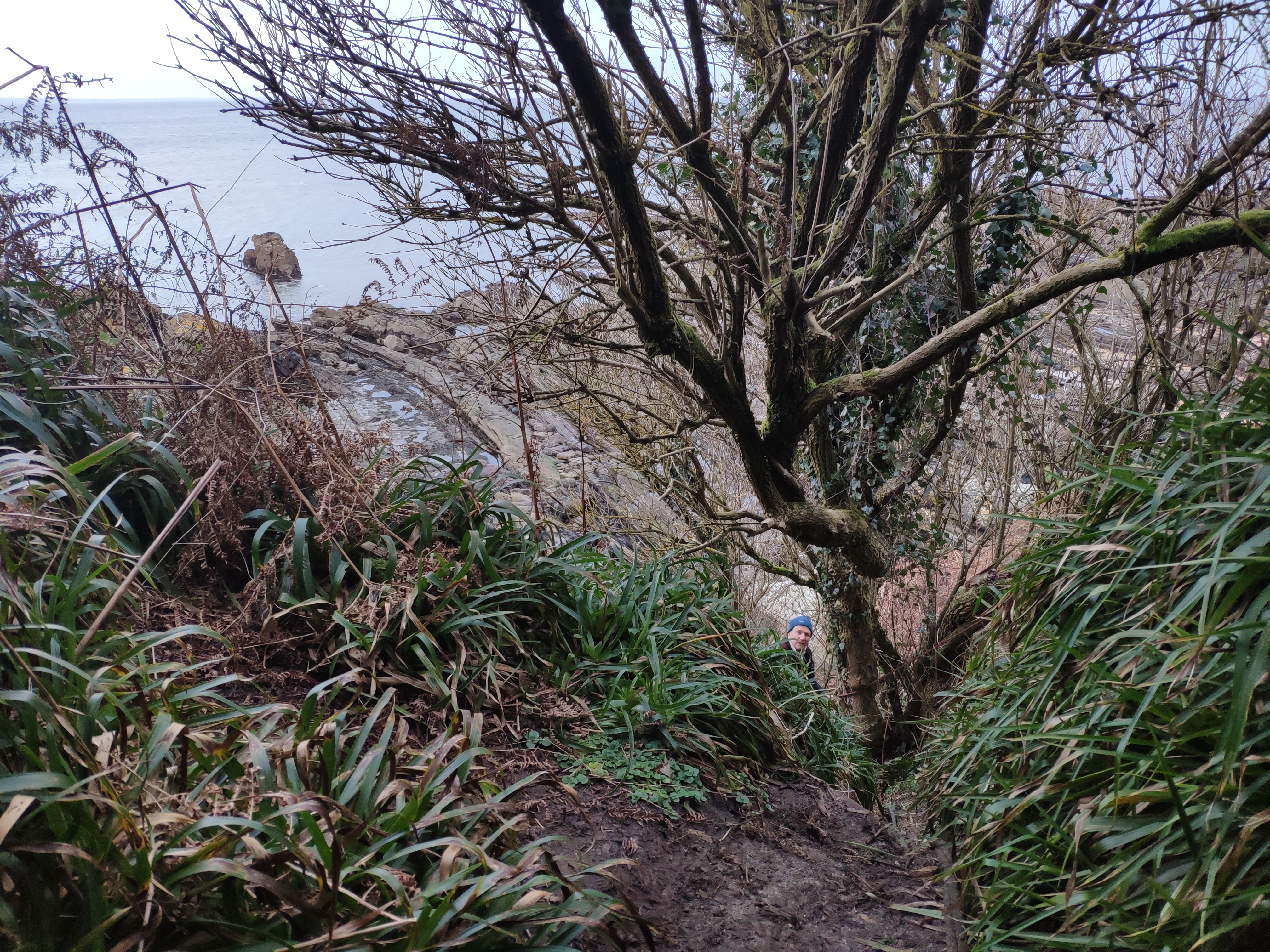
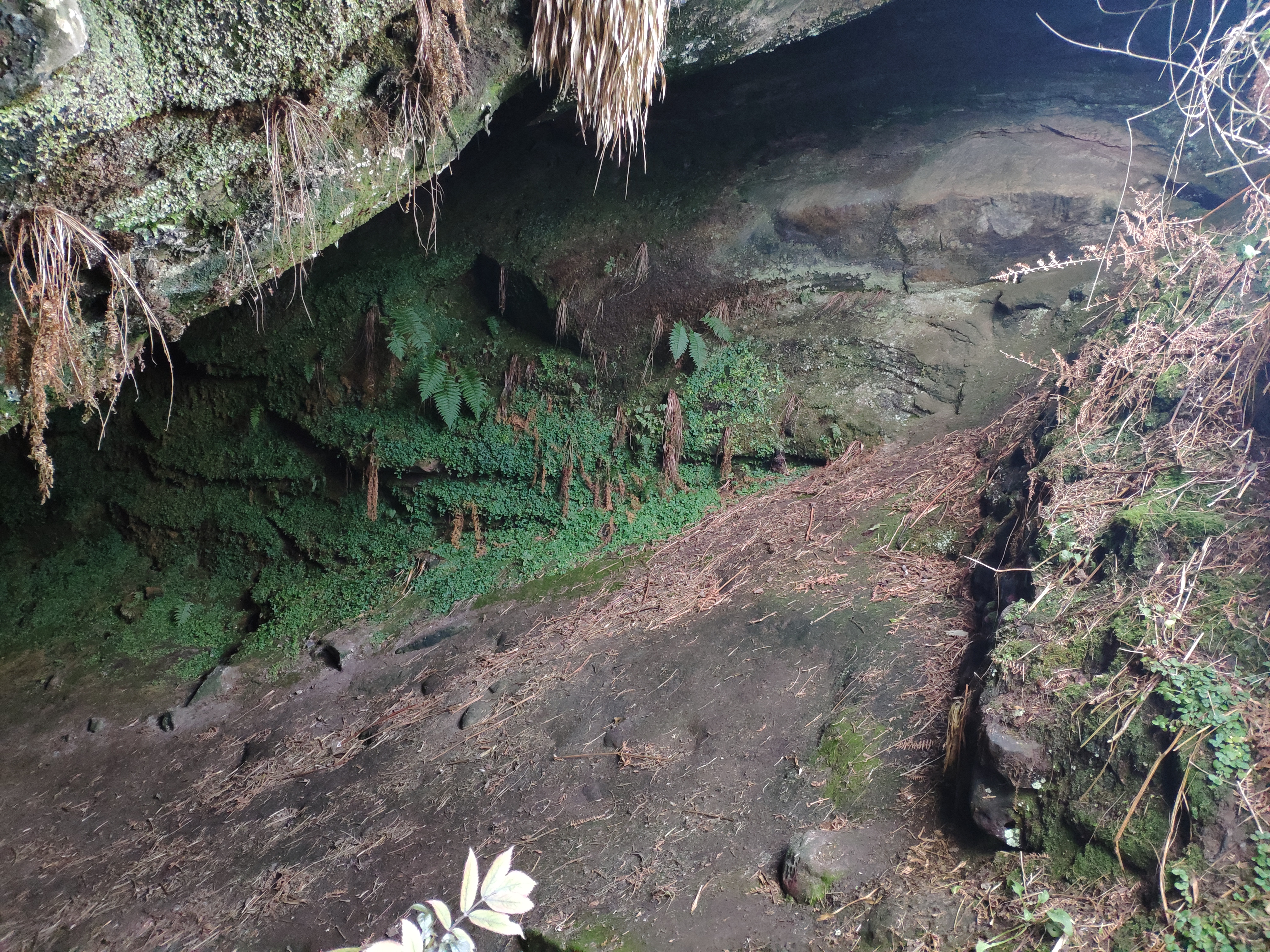
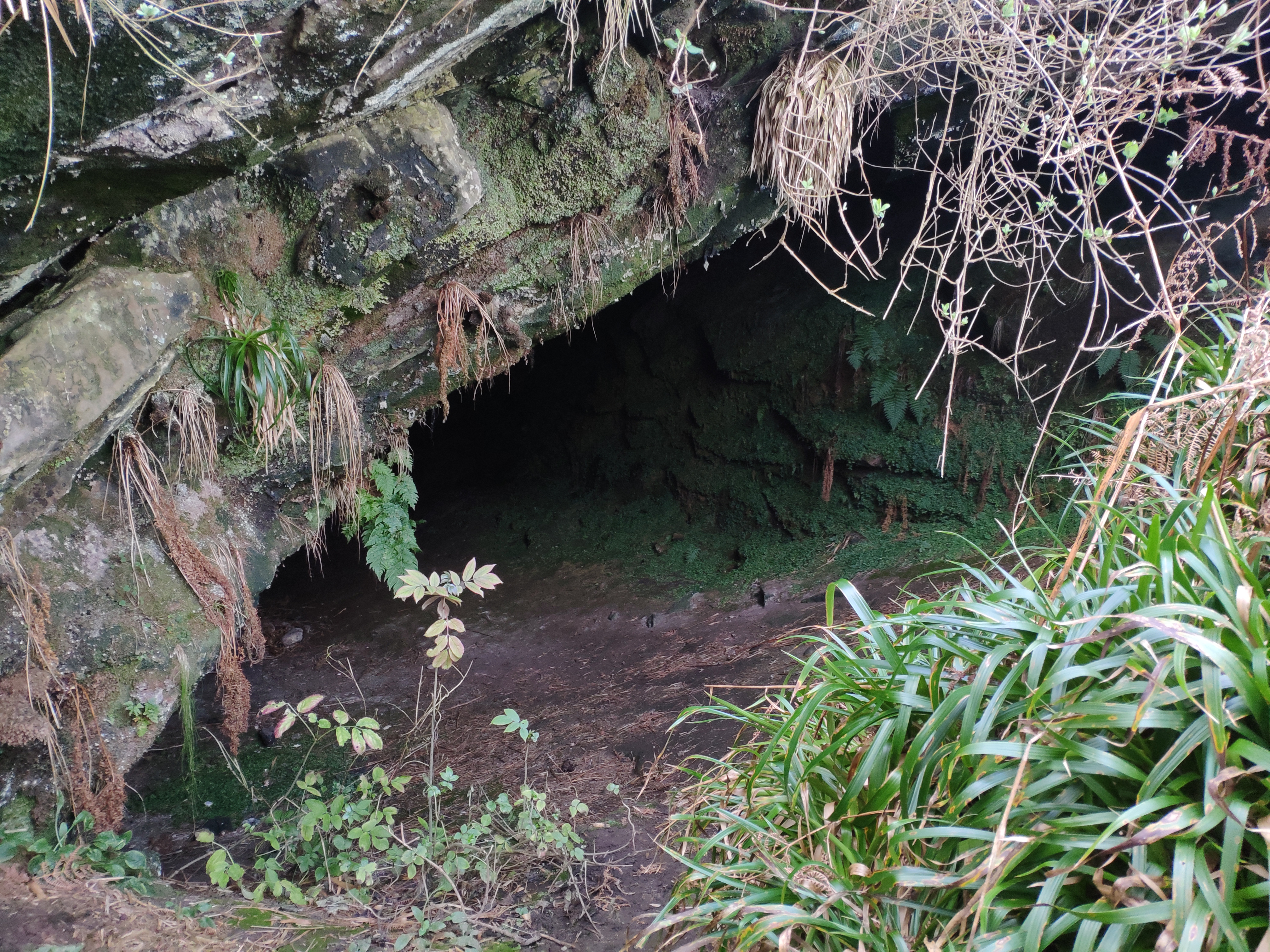
Large cave located part way up the coastal cliff, access is a scramble up a very steep muddy path with the help of ropes tied to trees. There is a stretch of rough walling at the mouth of the cave. No sign of historic carvings.
Location
353205.00
715740.00
27700
56.3317108
-2.7583828
Submitted photographs
Image
Date
Caption
User
19/01/2020
Looking out of Kinkell Cave
joannahambly
19/01/2020
Roughly built wall at cave entrance on right
joannahambly
19/01/2020
Entrance to Kinkell Cave
joannahambly
Submitted updates
Update id
Date
User
3365
19/01/2020
joannahambly
Tidal state
Low
Site located?
Yes
Proximity to coast edge
11-50m
Coastally eroding?
not eroding
Access
accessible - difficult terrain
Description
NO51NW 42 5320 1574.
(NO 5306 1576) Kinkell Cave (NAT)
OS 6" map (1921)
Kinkell Cave. Excavated May and June 1913 by Prof Jehu and A G B Wace. The cave is about 15 feet wide and 80 feet long. The floor has a double slope, one from north to south due to the pile of fallen rubbish at the entrance, the other from west to east due to the angle of dip of the sandstone beds.
A trench was dug to a depth of 6 feet from the mouth, cutting into the cave from N-S. "At a distance of about 12 feet from the entrance traces of human habitation were detected by the presence of a thin black
layer, 1 1/2 to 3 feet below the present floor. From this point inward a pit was sunk covering approximately the hatched area shown on the plan." The stratification in the pit proves that the cave had been inhabited at several periods, and a rich find of bones was obtained. The thin black layer covered only a small area and contained a few bones and shells.
1 1/2 feet below this another black layer was seen, nearly 3 feet thick and extending over the whole of the hatched area (see plan). This deposit was full of decomposed organic matter indicating human occupation and it rested on a roughly made floor of Sandstone slabs covering the space shown on the plan by cross-hatching. This layer yielded bones, fragments of boars tusks, and shells of winkles, whelks and limpets. Two fragments of ordinary reddish and rather thin Romano-British ware and a piece of Samian ware, evidently the centre of the bottom of a bowl, were the only fragments of pottery found. These sherds however, date the occupation of the cave to the second century AD, but since the sherd was found in the middle of the deposit the floor may be of earlier date. The handle of a bronze jug and some iron nails were also found in this stratum. A slab of sandstone with curious incisions was found on top of this stratum. The type of stone is not obtainable in situ anywhere near the cave; it bears a human figure, possibly a monk and some crosses. The crosses mentioned by Stuart (1867) as visible on the wall of the cave are probably of the same period. (Stuart dates the small inscribed crosses in the majority of Fifeshire caves to 5th-9th century).
Below the paved floor was another layer of sandstone rubble, and in this at two levels (E-F) were thin black streaks indicating two short periods of human occupation. These yielded only a few bones and shells and are so close below the paved floor that they cannot be much anterior in date.
"The data lead us to the conclusion that the cave was inhabited in the Roman period and again during the Celtic Early Christian period. Later, according to local tradition, it served as a place of refuge for Covenanters."
A J B Wace and Jehu 1915
Similar information. The cave now bears no trace of the sculptured animal and crosses, probably due to the fact that the sandstone roof is gradually flaking off.
Information from D C Baird, 29 June 1956 (visited February 1952).
NO 5314 1574. The frontage of the cave has silted up, and entry was not possible. The opening is 4m wide and 1m high.
Visited by OS (JLD) 23 October 1956
The actual cave referred to in OS 6" map (1921) is situated at NO 5320 1573 and is still accessible.
Visited by OS (ES) 19 November 1962
NO 5320 1574. This cave is as planned by Wace and Jehu and its present condition generally as given by Baird.
Surveyed at 1/2500.
Visited by OS (WDJ) 3 September 1968
Roman finds from the cave consist of a possibly 2nd century handle of a bronze jug, a fragment of possibly stamped Samian and two fragments of coarse reddish pottery.
A S Robertson 1970
Kinkell cave; sculptured stone.
Seen from outside: very overgrown at entrance.
Site recorded by Maritime Fife during the Coastal Assessment Survey for Historic Scotland, Fife Ness to Newburgh 1996
References
Guttmann, E (2002 )
'Time and tide at East Wemyss: excavations on the foreshore 1980-1995',
Tayside Fife Archaeol J, 8, 2002, Perth, 114, 121,
Robertson, A S (1970 a)
'Roman finds from non-Roman sites in Scotland',
Britannia, 1, 1970, Table 5,
Stuart, J (1867 )
Sculptured Stones of Scotland,
2, Edinburgh, Vol.2, lxxxiii,
Wace and Jehu, A J B and Professor (1915 )
'Cave excavations in East Fife',
Proc Soc Antiq Scot, 49, 1914-15, 233-7.
19-01-20:
Large cave located part way up the coastal cliff, access is a scramble up a very steep muddy path with the help of ropes tied to trees. There is a stretch of rough walling at the mouth of the cave. No sign of historic carvings.