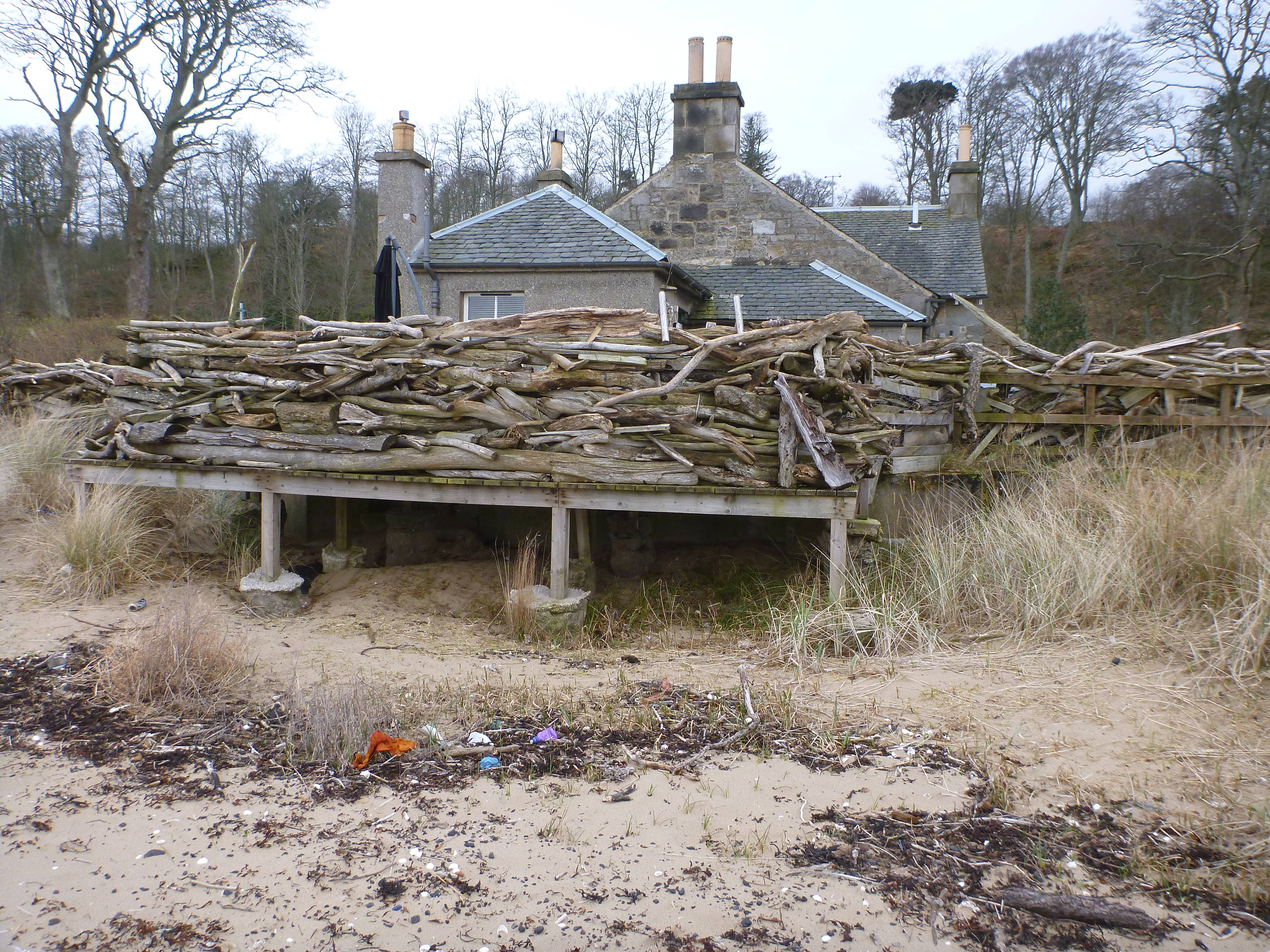
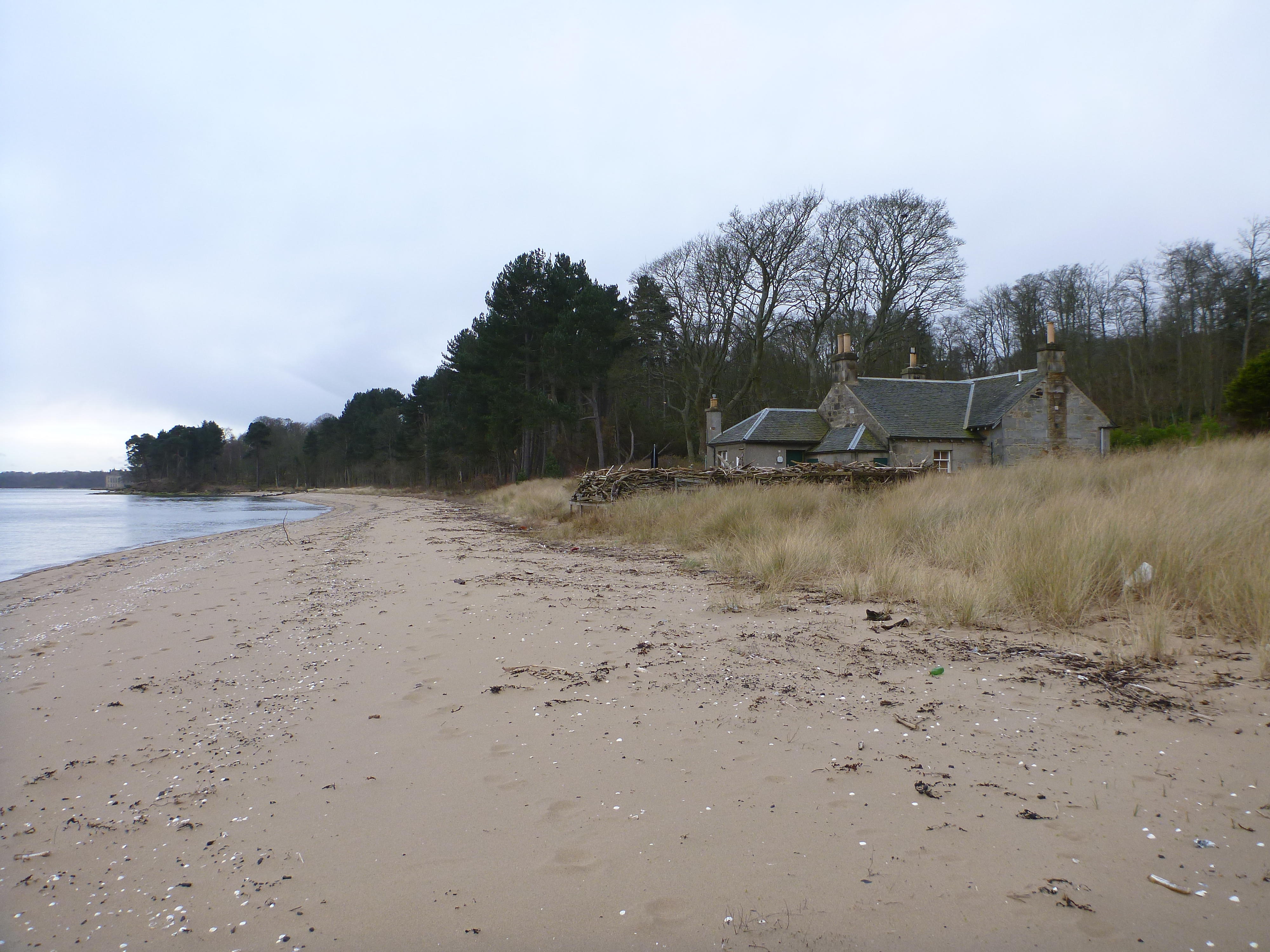
A small cottage in the Dalmeny Estate, located on the coast edge. Its name is said to derive from the netting used to catch salmon here until the 1950s. The cottage is occupied and maintained, and first appears on the OS map of 1856, suggesting a 19th century date.
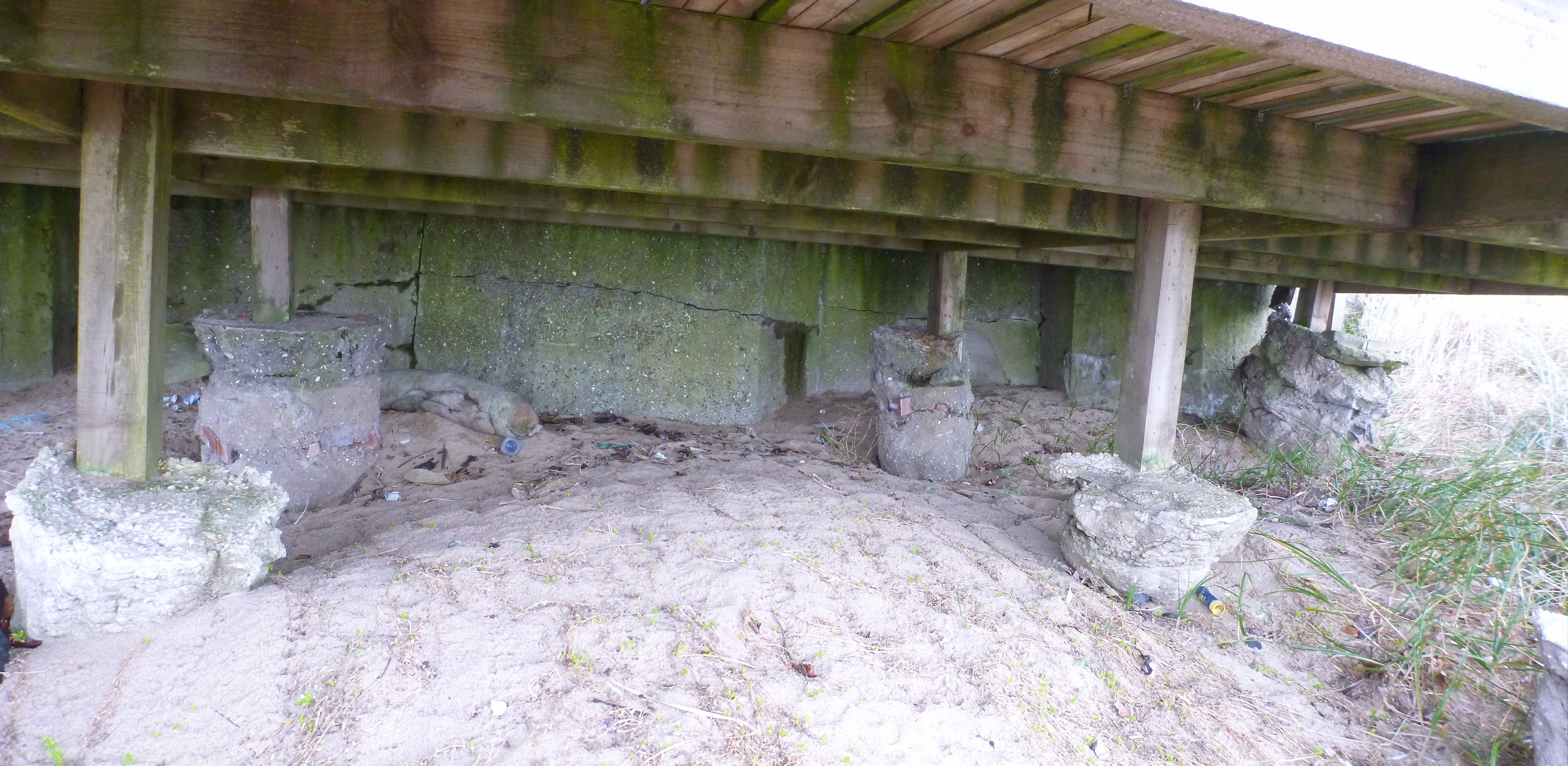
It is located within the dunes at the edge of the beach, and has an interesting coastal defence wall made of probably reused concrete blocks.
Location
315972.00
679335.00
27700
55.9995728
-3.3488681
Submitted photographs
Image
Date
Caption
User
21/03/2014
Detail of coastal defence wall
Laurens
21/03/2014
Fishery Cottage from coast
Laurens
21/03/2014
Fishery Cottage
Laurens
Submitted updates
Update id
Date
User
1646
21/03/2014
Laurens
Tidal state
High
Site located?
Yes
Proximity to coast edge
Coast edge
Coastally eroding?
active sea erosion; has eroded in the past
Coastal defence
Yes
Threats
none
Visibility above ground
Highly visible (substantial remains)
Access
easily accessible - no restrictions; accessible on foot (footpath); vehicular access
Local knowledge
is well visited
Description
A small cottage in the Dalmeny Estate, located on the coast edge. Its name is said to derive from the netting used to catch salmon here until the 1950s. The cottage is occupied and maintained, and first appears on the OS map of 1856, suggesting a 19th century date.
It is located within the dunes at the edge of the beach, and has an interesting coastal defence wall made of probably reused concrete blocks.
None at present, monitor in future to evaluate progress of erosion.
Comments
The cottage is accessible along the popular coastal path between South Queensferry and Cramond and is regularly passed by walkers. Vehicular access possible, but restricted to vehicles authorised to enter the Dalmeny Estate.
The cottage was previously involved in salmon netting in the Forth, and at low tide remains of net supports are reputed to be visible (not seen at time of survey, as tide was high).
The cottage is within the dunes, and is evidently at risk from erosion. It has a wooden platform projecting out over the beach towards the Forth on NE side, supported by wooden posts in clearly makeshift concrete bases which are exposed in the sand. Under this platform, an interesting coastal defence is visible, made of large concrete blocks. It is probable they have been reused, possibly from nearby military structures. It also has a wall of driftwood screening the house on the seaward side.
It is not known to me when these defences were erected. Two of my family expressed a belief that they hadn't always been there (i.e. within the last 20 years), but this is not reliable. Satellite imagery shows the platform there in 2000, but the defences themselves would not be visible.